AI for legal and accounting firms: drafting, compliance, client portals
Where AI moves the needle in a professional services firm — and the lines we deliberately do not cross. Plus a candid view on what regulators will tolerate.
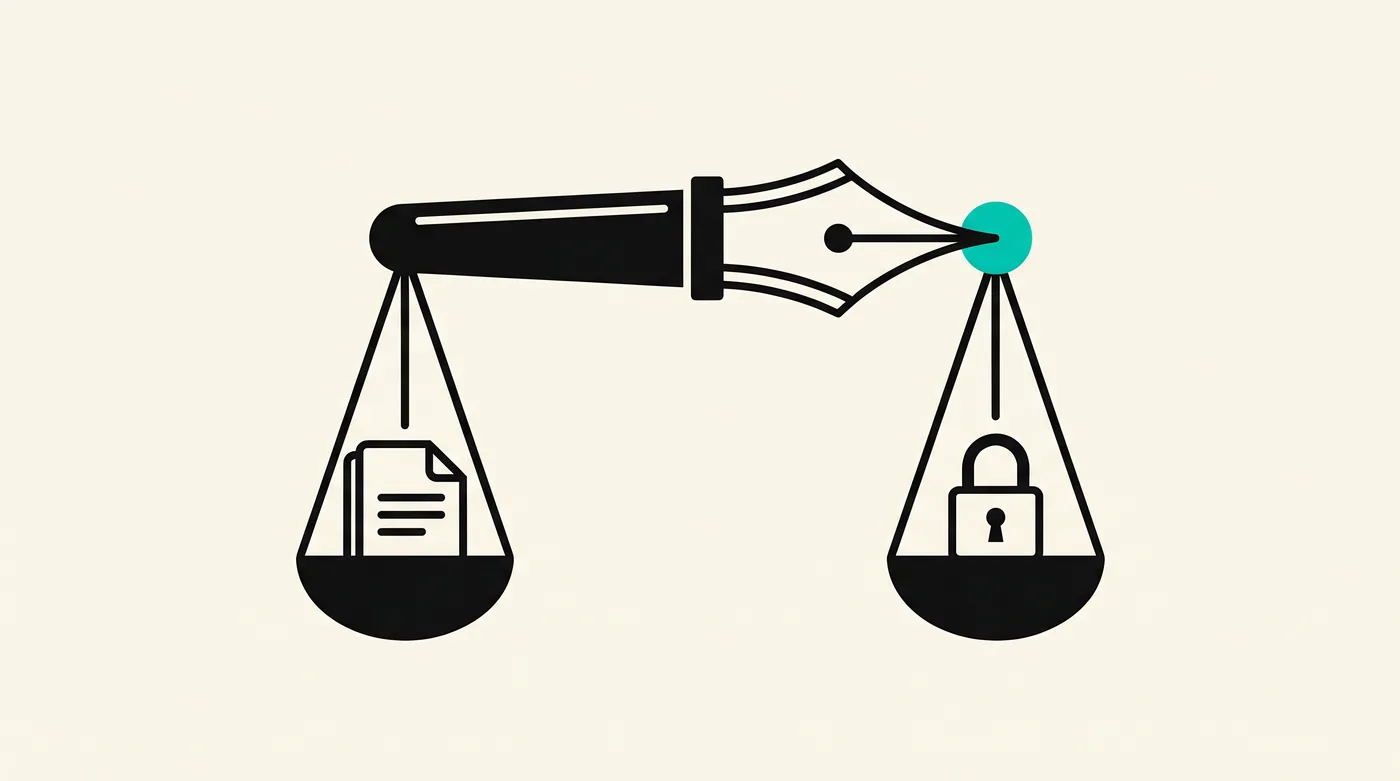
- Legal and accounting firms have four high-leverage AI surfaces: drafting, research, compliance, and client portals.
- AI drafts the first version of standard documents in your firm's voice; lawyer reviews and tightens.
- Confidentiality and privilege are non-negotiable — AI must never train on client data, must never cross matter boundaries.
- XWLex is in active build with these patterns + the audit trail regulators expect.
Lawyers and CAs spend significant time on drafting, research, and compliance — work that AI is genuinely good at. But the standards are different. Confidentiality is professional duty, not preference. The audit trail is regulatory, not optional. Below is the working frame we use building XWLex for legal and accounting firms.
The four high-leverage surfaces
1. Document drafting
Standard contracts, NDAs, retainer letters, opinion notes, audit reports, engagement letters. Every firm has templates. Every matter is a small variation. AI generates a first draft from a short brief and the firm's prior documents — lawyer / CA reviews and tightens.
Time saved per document: 60-80%. The lawyer's value moves up the stack — from typing to judgement.
2. Research summarisation
Recent judgments, regulatory updates, statutes, case-law on a specific question. AI reads them and summarises the relevant points with citations. The lawyer reads the summary + the cited paragraphs — not the full 60-page judgment.
Time saved per research task: 50-70%. Quality holds because citations are checkable.
3. Compliance calendar management
GST returns, ROC filings, AGM dates, IT returns, TDS, statutory audits, court dates. Per-client, per-matter. AI auto-populates the calendar from client metadata; sends reminders; drafts the client advisory note.
4. Client portals and communication
AI drafts client status updates, advisory notes on regulatory changes, follow-up messages — all in the firm's voice. Senior partner approves before sending.
The hard constraint: confidentiality
Three non-negotiables:
1. AI never trains on client data
No client data goes into model training, ever. This must be contractually enforced with the AI vendor — and verifiable in the architecture.
2. Per-matter / per-client isolation
Data from matter A is never visible to AI working on matter B, even within the same firm. The RAG layer must enforce this strictly. See multi-tenant AI architecture.
3. Audit trail
Every AI action is logged: what was the input, what model was used, what was the output, which lawyer reviewed, when. The audit trail survives regulator review.
What we deliberately do not automate
Legal advice itself
The advice goes out under the lawyer's name. The judgement is the lawyer's. AI drafts; the lawyer is responsible.
Court filings without review
Every filing is reviewed by a qualified human. AI assistance does not change this.
Privilege calls
Whether something is privileged is a legal judgement. AI flags potential privilege issues for human decision; it does not decide.
Client triage on high-stakes calls
First contact on a serious matter is human-to-human. AI handles scheduling, follow-ups, document collection — not the consult itself.
What regulators will and will not tolerate (2026)
Based on current Bar Council guidelines (India), ABA opinions (US), and SRA guidance (UK):
- AI-assisted drafting: permitted, with disclosure to client where material.
- AI-only legal advice: not permitted. Practice of law remains restricted to qualified humans.
- AI in court filings: permitted with human verification. Hallucinated citations have already produced sanctions.
- AI handling of client funds: restricted in most jurisdictions; human approval required.
- AI training on client data: not permitted under privilege rules.
The trajectory is permissive on assistance and restrictive on autonomy. We design for that line.
What to measure
- Hours per matter on drafting. Should drop by 50-70% on standard documents.
- Time-to-first-draft. Standard documents in minutes, not days.
- Research turnaround. From days to hours for standard research tasks.
- Client portal adoption rate. Are clients actually using it?
- Realised rate per partner-hour. The actual lift in profitability — and the metric your managing partner cares about.
What XWLex ships at v1
Out of the box, XWLex ships matter management, document automation, client portals, compliance calendars, billable-hour tracking, document vault with audit log, electronic signing. AI capabilities — drafting, research summarisation, compliance advisory, client communication drafts — are built into the same product with strict per-matter isolation.
What this means for you
- The highest-leverage AI move in a legal or accounting firm is document drafting on standard documents. Start there.
- Compliance calendar automation is the second move — pays back fast on missed-deadline risk.
- Confidentiality discipline is everything. Choose a vendor that lets you verify the isolation, not just claim it.
- Join the XWLex waitlist for the v1 release.
- For adjacent industries: AI for tax + invoicing, AI for clinics.
Book a 30-minute call and we will walk through your firm's specific workflow with you.
Related from the blog

AI for tax and invoicing: how Indian SMBs file GSTR in five minutes
GSTR-1, GSTR-3B, TDS, receipt OCR, CA handoff. What AI actually changes for freelancers and small businesses navigating Indian taxation.
AI for clinics: AI scribes, patient WhatsApp, and the audit trail
Where AI helps a small clinic without crossing the clinical line. AI scribes, patient communication, triage, and what we deliberately do not automate.
AI automation use cases for small business (2026 guide)
Twelve concrete use cases, one per industry. The pain, the AI fix, what you should measure. Practical, not hypothetical.
Talk to a real engineer.
A 30-minute call. We will tell you honestly whether AI is the right fix and what it would take.