The AI-native operator playbook: a daily rhythm
What an AI-native operator actually does on a Tuesday. The morning digest, the approval queue, the quality reviews, the end-of-day handoff. A new operating rhythm.
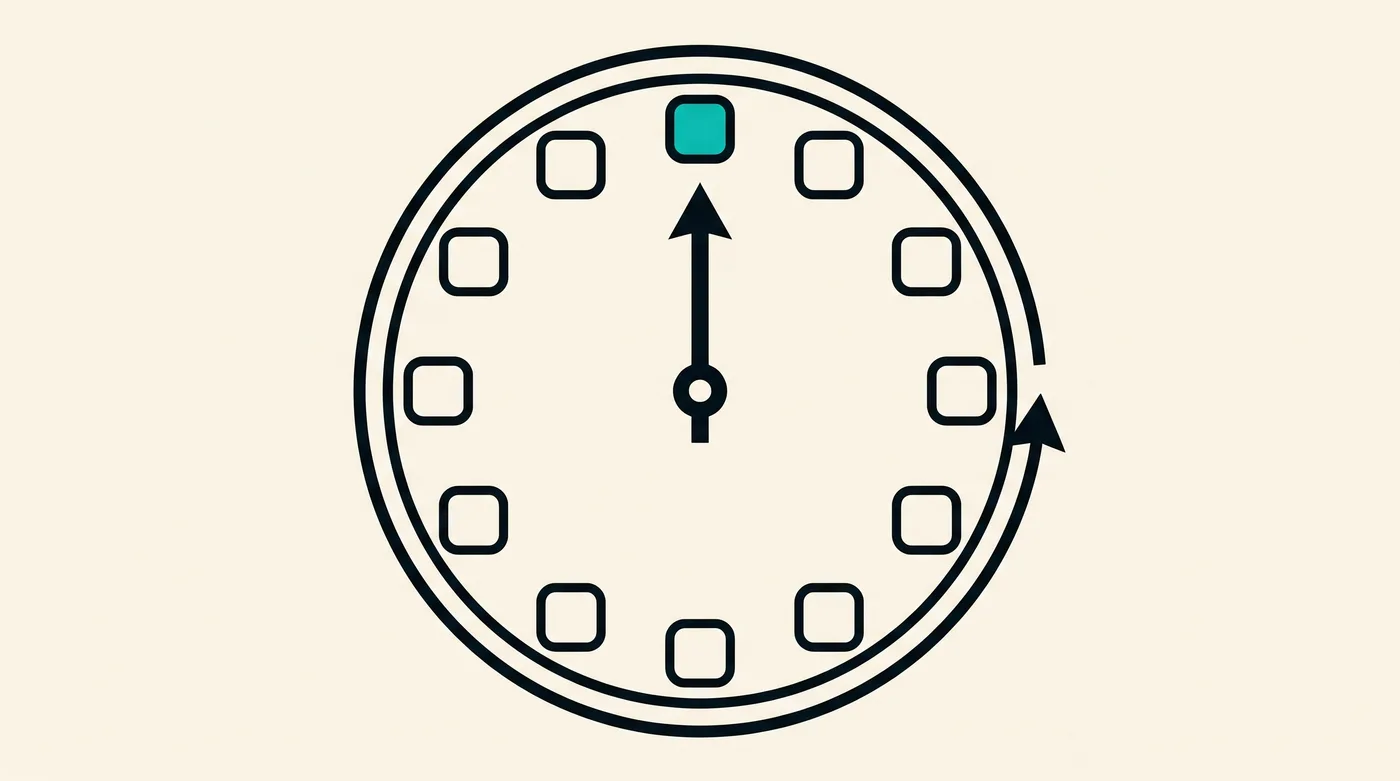
- An AI-native operator runs a different daily rhythm — morning digest, approval queues, quality reviews, end-of-day handoff.
- Most of the day is spent reviewing AI outputs and editing the edge cases. The agents do the typing.
- Five practices: written communication, daily approval queue, quality sampling, postmortem habit, the off-switch.
- This is the rhythm we use internally at Xwits and what we ship inside XWorks Suite operator dashboards.
The role of "operator" is changing. Five years ago an operator did the work. Today, an AI-native operator supervises a fleet of AI agents that do the work. The daily rhythm looks different. The skills look different. The metrics look different.
This post is a working playbook based on how our small Xwits team operates internally — and on what we have built into the operator dashboards in XWorks Suite.
The shape of an AI-native day
Morning — The AI digest (15-30 min)
First action of the day: open the AI digest. This is a single document (generated by the AI overnight) summarising:
- What the AI agents did since the last review
- Outliers — outputs flagged as uncertain or unusual
- Stuck items in the approval queue (anything older than 24 hours)
- The day's expected workload and any anomalies in the data
Read it. Triage. Adjust priorities for the day. Close it.
Mid-morning — Approval queue (1-2 hours)
The bulk of the morning is approving AI outputs. For each item in the queue:
- Read the AI's draft / proposed action
- Approve (one tap) or edit + approve
- For rejected items, mark the reason — this becomes training signal for future model improvements
Good operators approve at a steady pace: 40-100 items per hour for most domains. The speed comes from trusting the AI on the routine cases and slowing down on the edge cases.
Midday — Quality sampling (30 min)
Pick 10 outputs the AI auto-shipped (without human approval, where that pattern is enabled). Review them with fresh eyes. Are they all good? If not, the auto-approval threshold is too loose — tighten it.
This is the most underrated part of the day. Quality drift is silent. Sampling catches it.
Afternoon — Exceptions and policy (variable)
The cases the AI escalated to a human because they were too uncertain. These are the most interesting cases — usually new patterns, novel situations, or edge cases.
For each exception:
- Handle it manually
- Decide if this is a one-off or a pattern
- If pattern: write a new policy / rule / example so the AI handles it next time
End of day — Handoff + tomorrow's setup (15 min)
Five-minute summary in writing: what happened today, what is pending, what the AI is unsure about heading into tomorrow. Posted to the team channel or stored where the next shift picks it up.
For solo operators, this is for future-you. Reading your own handoff is the cheapest way to keep the rhythm consistent across days.
The five practices
1. Default to written
Everything an AI-native operator does ends up in writing — because the AI reads writing. Decisions made in meetings without written followups are decisions the AI cannot learn from.
2. Daily approval queue (not weekly)
Approval queues that fall behind become approval graveyards. Daily cadence keeps quality drift visible. If the queue is too big to clear in 90 minutes, you have an upstream problem to fix.
3. Quality sampling on auto-shipped outputs
The AI is allowed to ship some outputs without human approval — but only after a human has sampled enough to trust the pattern. Sampling never stops. It is the immune system of an AI-native operation.
4. Postmortems on AI failures
Every meaningful AI failure gets a 30-minute postmortem. What went wrong, why, what guardrails were missed, what we changed. Blameless. Filed somewhere the AI itself can read.
5. The off-switch
Every AI feature has a one-click disable. If something is going badly wrong, the operator can stop the AI without escalating to engineering. Trust comes from the off-switch being real.
What an AI-native operator is not
Not a prompt engineer
The operator does not write prompts. The platform handles prompts. The operator handles cases.
Not a data scientist
The operator reads metrics. They do not build them. The platform handles observability and dashboards.
Not a robot
The operator is the human in the loop. Their job is the judgement the AI cannot make.
The new metrics
AI-native operators are measured on different things:
- Approval throughput — items approved per hour
- Approval rate — what % of AI outputs they ship vs reject
- Quality sample score — how often sampled outputs hold up
- Time-to-policy — how fast they convert recurring exceptions into rules
- Drift catch rate — how many quality issues they catch before customers do
Notice what is missing: "items typed", "messages sent", "documents drafted." Those are AI metrics now.
How this scales
A traditional operator handled ~50-200 units of work per day (tickets, invoices, leads — depending on industry). An AI-native operator supervises an AI that handles 1,000-10,000 units per day. The lift is 10-100×, but only if the rhythm is right.
At our partner sites where this rhythm is established, one AI-native operator handles the equivalent of 5-10 traditional operators. The team does not shrink; the throughput grows. Or the team shrinks and the cost drops. Or some of both.
What this means for you
- If you are introducing AI, do not "add AI to existing operator roles." Redesign the role around the AI.
- Start with the daily rhythm: morning digest, approval queue, quality sampling, exceptions, end-of-day handoff.
- Measure the new metrics, not the old ones. The traditional throughput numbers will look misleading.
- Hire the right shape: high judgement, fast pattern recognition, written communication. Read our hiring post when it ships.
- Read our AI-native culture post for the broader team-design question.
Want to design the AI-native operator role for your specific business? Book a 30-minute call. We will sketch it with you on the call.
Related from the blog

AI rollout playbook: month-by-month for a 10-50 person team
A four-month plan from "we should do AI" to "AI is running in production." Specific milestones each month. What to commit to. What to kill.
How to hire your first AI engineer (without being one)
A practical guide for non-technical hirers. What to look for, interview questions that work, portfolio assessment without becoming a code reviewer, salary ranges.
Building an AI-native culture in a 10-person team
Culture is the bottleneck after tooling. Five rituals, three artefacts, and the meeting we deleted. How a small team learns to ship with AI in the loop.
Talk to a real engineer.
A 30-minute call. We will tell you honestly whether AI is the right fix and what it would take.