AI for HR: hiring, onboarding, performance
Where AI helps an HR team (drafting JDs, screening at scale, onboarding content) and where it does not (final hiring calls, performance judgement, terminations).
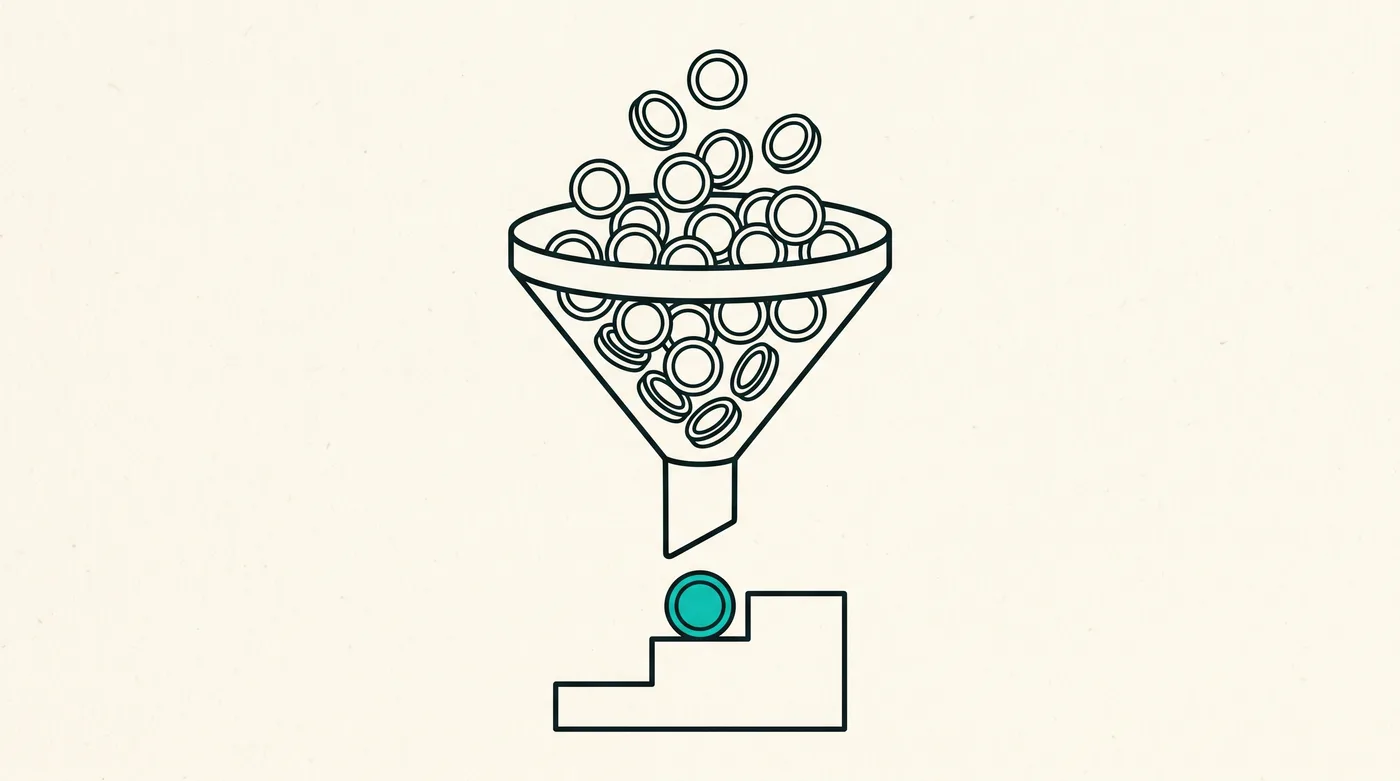
- HR is one of the most AI-amenable functions for content (JDs, onboarding docs, policies) and one of the most AI-risky for decisions (hires, fires, ratings).
- Six high-leverage places AI works: JD drafting, candidate screening at scale, onboarding content, policy Q&A, performance write-up drafting, exit interview synthesis.
- Three places AI must stay out of: final hiring decisions, performance ratings, termination calls.
- Bias risk is real. Every AI HR feature needs bias auditing before deployment and quarterly thereafter.
HR is full of writing, reading, and pattern-matching — the work AI is good at. It is also full of judgement calls and protected-class implications — the work AI must not own. Below is the working frame.
The six high-leverage surfaces
1. JD drafting
Every role needs a JD. Most JDs are written in 20 minutes from a template + the hiring manager's notes. AI drafts a first version in 2 minutes from those same inputs. The recruiter edits in 5.
Quality lifts because the AI catches inconsistencies (this JD says "senior" but lists junior responsibilities) and gendered-language flags (we have known these for years and JDs still drift).
2. Candidate screening at scale
100 resumes for a role. The recruiter cannot read all 100 deeply. AI produces a structured summary per candidate: years of experience, key skills, gaps vs JD, notable signals. Recruiter shortlists from summaries.
Critical guardrails: AI summarises; AI does not rank or reject. The recruiter makes shortlist decisions. The AI's summary must cite the resume text it drew from — no fabrication.
3. Onboarding content
Every onboarding has 30-50 docs: welcome notes, role-specific learning paths, policy walkthroughs, system access guides. AI personalises the onboarding pack per new hire from a master template + their role + their location.
Time-to-productivity drops; HR's manual prep drops; the new hire feels like the company took the time to personalise.
4. Policy Q&A
Employee asks "how much PTO do I have?" "What's the parental leave policy?" "How do I expense a conference?" AI answers from the policy database, grounded in citations. Routes to a human for anything edge-case.
HR's time on Q&A drops 70%. Employees get answers in seconds. Off-hours queries get answered.
5. Performance write-up drafting
Manager has notes from 1:1s and observations. AI structures them into a draft review: strengths, areas to develop, specific examples, goals. Manager edits + signs. Quality of the writing improves; the manager's time per review halves.
Critical guardrail: the manager owns the rating + the examples. AI structures, never rates.
6. Exit interview synthesis
Exit interviews produce real signal — and most of it gets lost because no one synthesises across exits. AI clusters the themes across last 6 months: "five people mentioned the on-call rotation," "three people felt growth was unclear." HR sees the patterns; leadership acts.
The three places AI must not go
Final hiring decisions
The decision to hire is the hiring manager's. AI can summarise interviews, surface strengths and risks, but cannot make the call. Beyond the legal issues, hiring is a judgement call that compounds — bad hires affect the team for years, and the bias the AI inherited would compound with them.
Performance ratings
Same logic. AI helps the manager organise the write-up. The rating is the manager's, not the AI's. Calibration discussions are human-to-human.
Termination calls
Never AI-led. Termination is a high-stakes human conversation. AI prepares the manager (script, key points, legal handoff) but does not initiate or deliver.
The bias problem
AI inherits bias from training data. In hiring contexts, this is illegal in many jurisdictions and harmful everywhere. Three things matter:
- Bias audit before deployment. Run the AI on a labelled test set. Measure outcomes by protected class. Document the gaps.
- Bias audit quarterly. Models drift. Vendor changes. Your own data changes. Re-audit on cadence.
- Disparate-impact monitoring in production. Watch the outcomes by protected class in real use. If the AI's outputs correlate with a protected attribute, that is a finding to investigate.
Vendors will tell you their model is "unbiased." That is not a real claim. The honest version is "we audit for bias on these criteria, with these results." Demand the audit.
Regulatory landscape (mid-2026)
- EU AI Act: hiring + HR use cases classified as high-risk. Conformity assessment + transparency obligations apply.
- US (state level): NYC Local Law 144, Illinois AI Video Interview Act, California SB 1047 — each impose audit + disclosure requirements.
- India DPDPA: employee data is personal data. Consent + purpose-limitation + grievance redressal apply.
- UK + EU GDPR: automated decision-making restrictions (Article 22) restrict fully-automated hiring decisions.
The trend is permissive on assistance, restrictive on autonomy. Build accordingly.
What to measure
- Time-to-hire. Should drop with screening + scheduling automation.
- Quality-of-hire. 6-month performance of AI-screened hires vs baseline. Watch this carefully.
- Onboarding time-to-productivity. Should drop with personalised onboarding.
- HR ticket volume on policy Q&A. Should drop with self-service AI Q&A.
- Pass-through rates by protected class. Should be flat. Any drift triggers a bias review.
The cultural risk
AI in HR is sensitive. Employees worry about being "screened by an algorithm." Communicate clearly:
- What AI is doing (summarising, drafting).
- What AI is not doing (deciding, rating, terminating).
- How decisions are made (human, with AI inputs).
- How employees can appeal.
Trust is the foundation of HR. Transparency is the foundation of trust.
What this means for you
- HR has six high-leverage AI surfaces and three off-limits zones. Know the line.
- Bias auditing is non-negotiable. Quarterly cadence after launch.
- Regulatory landscape is permissive on assist, restrictive on autonomy. Design for that.
- Communicate clearly with employees about what AI is and is not doing.
- Read how to hire your first AI engineer if you are starting from scratch.
Building AI for HR? Book a 30-minute call. We will walk through your specific surfaces and risks.
Related from the blog
How to hire your first AI engineer (without being one)
A practical guide for non-technical hirers. What to look for, interview questions that work, portfolio assessment without becoming a code reviewer, salary ranges.
Building an AI-native culture in a 10-person team
Culture is the bottleneck after tooling. Five rituals, three artefacts, and the meeting we deleted. How a small team learns to ship with AI in the loop.
AI automation use cases for small business (2026 guide)
Twelve concrete use cases, one per industry. The pain, the AI fix, what you should measure. Practical, not hypothetical.
Talk to a real engineer.
A 30-minute call. We will tell you honestly whether AI is the right fix and what it would take.